


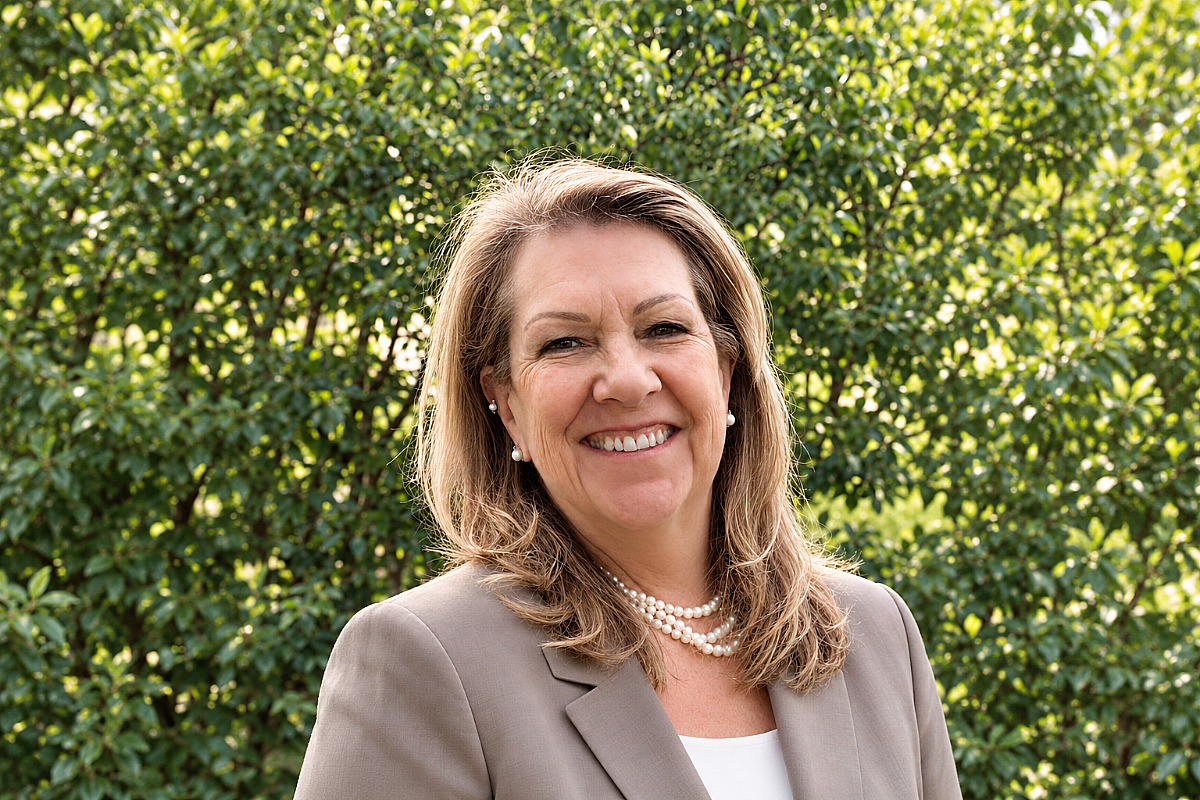
Kathrina Proscia ’03 is a big believer in the power of stories.
She should know. As senior director, executive office, and board liaison at StoryCorps, Proscia has been immersed in the art of storytelling for more than two decades.
StoryCorps is probably most familiar to NPR listeners who hear the stories on Morning Edition on Friday. The national nonprofit launched in 2003 with a story booth in Grand Central Terminal in Manhattan, where people came to record 40-minute stories in a soundproof recording studio with a loved one or friend. The organization has since added the capability to record stories virtually through StoryCorps Connect or via the StoryCorps app.
Proscia joined StoryCorps in 2006. She is now the second longest tenured employee, behind only Dave Isay, the president and founder. The stories have taught her about people and cultures, preserved family memories, and demonstrated how the act of sharing stories can bring people together, despite outward differences.
“To me, a good story affects you, lifts you up, and changes you for the better,” Proscia says. “It has something nuanced or a message, an a-ha moment or a nugget of wisdom. A good story will tug at your heart strings and make you feel something. If it’s really good, it can even change your mind about something.”
Journey to a Degree
Proscia’s own story began in Bensonhurst, Brooklyn, where she was born to a German immigrant mom and an Italian dad, who ran a supermarket. She was raised in Queens and still speaks with a New York accent.
As a young woman, she went to business school and worked at an ad agency in midtown Manhattan. One day, she was mugged in broad daylight while entering a subway station. The thief grabbed her necklace and tore down the street, with Proscia — in 3-inch heels — running after him. The event traumatized her. She left her Manhattan job and found employment in Queens.
When she got pregnant, Proscia left the 9 to 5 grind to raise her two daughters. Over the next 20 years she worked part time in a law firm, assisted with the bookkeeping at her father’s supermarket, and helped a cousin with childcare. As president of the home school association, she raised funds for a new science lab and a refurbished gymnasium.
Even with all she was doing, the lack of a bachelor’s degree bothered her. “At some point, I was like, ‘That is not okay,’” she says. “It’s time to do something for yourself.”
A Confidence Boost
A close cousin studying at Empire State University convinced Proscia to enroll. Proscia fell in love with learning. She still gets sentimental remembering commencement and the way her daughters cheered her on as she crossed the stage to get her bachelor’s in historical studies.
After graduation, a mentor at SUNY Empire challenged Proscia and asked what she planned to do with her degree. The question inspired her to say yes when a relative working at StoryCorps asked Proscia to consider joining the new nonprofit. Having her degree, she says, “gave me a sense of self-worth and the confidence to say, ‘Okay, I’ll do this.’”
It had been 19 years since Proscia worked in an office. Soon, she was organizing office procedures and protocols and designing the office space. Within months, she was Isay’s executive assistant. Two days a week soon turned into three, then five.
Today, 20 years later, Proscia is involved in many facets of StoryCorps and still works closely with Isay, as well as the CEO and board.
Recording History
“The point is to give everyone the opportunity to tell their own story in their own voice, and to make everyone feel heard,”
Since its inception, StoryCorps has helped over 750,000 people have meaningful conversations; it now has about 400,000 stories in its archives. With a participant’s permission, the stories are also archived at the American Folklife Center at the Library of Congress and become part of the permanent history of the U.S., Proscia says.
StoryCorps has created numerous initiatives designed to collect different kinds of stories. A small number air on NPR. More descriptive stories may wind up animated on the StoryCorps website or YouTube.
Other stories have been published in one of StoryCorps’ five books. A sixth book, a graphic novel, is due out in October; “Home of the Brave: A StoryCorps Collection of American Voices,” will feature people telling the history of the U.S. in their own voices.
Proscia has recorded several stories herself, including one she did with her mom and sister, and another she did with her daughters. She also participated in a project called Connect250 “America Meet America,” where people are paired with someone from another part of the country to learn about each other.
Proscia encourages everyone to record a StoryCorps story. “The point is to give everyone the opportunity to tell their own story in their own voice, and to make everyone feel heard,” she says.