



WHY I WORK IN SECURITY
The events of 9/11 changed our nation's approach to security on many levels. We spoke to two students about their work in this evolving field.
By Catalina Irigoyen
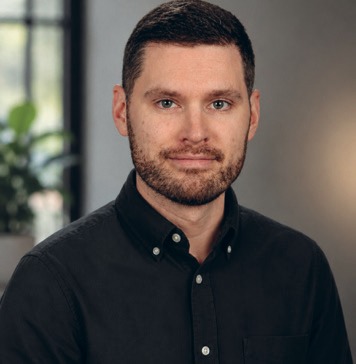 "One of the biggest influences on me was Rick Rescorla, vice president of corporate
security at Morgan Stanley during 9/11. After surviving the 1993 World Trade Center
bombing, Rescorla became convinced another major attack would occur and implemented
regular evacuation drills and emergency training for Morgan Stanley employees. On
September 11, his emphasis on preparation, coordination, and decisive leadership helped
thousands of employees evacuate safely from the South Tower (Rescorla himself died
that day). His approach to crisis response strongly influenced my work and the emphasis
I place on training, communication, and emergency planning within my school community.
"Working in school safety and security has shown me that effective safety efforts go far beyond physical security measures. It is really about creating systems and relationships that help people and organizations respond effectively during difficult situations. My studies of terrorism and counterterrorism have reinforced many of the lessons that emerged after 9/11, especially the consequences of poor communication, fragmented organizational structures, and failures in coordination between agencies and leadership. Those lessons are still highly relevant today. Ultimately, I hope my work helps create safer and more supportive environments while strengthening resilience and trust within schools and communities."
— Branden Haskell '26
Director of School Safety & Security for The Harley School, Rochester, NY
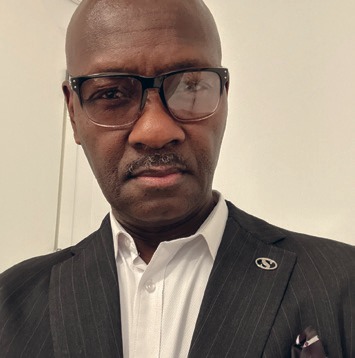 "The events of September 11, 2001, completely dismantled the 'fortress' mentality
we held for decades. 9/11 proved that our physical 'walls' — turnstiles, perimeter
gates, or front doors of a building — were absorbent. They do not automatically keep
out modern, evolving threats, whether those threats are physical, digital, or psychological.
"By relying strictly on physical walls, organizations inadvertently created 'traditional silos,' where teams handling physical security, cybersecurity, human resources, and business continuity rarely talked to one another. 9/11 was a massive wake-up call that proved these silos are a major liability. If our departments and communication channels are isolated, we miss the interconnected warning signs. We must move beyond a reactive, selective defense and instead build a proactive, integrated web of intelligence that mirrors the agility of modern threats.
"My work today is about achieving 'convergence' — merging physical security with digital intelligence. I hope to contribute a roadmap that moves our industry from being historians to analysts who interrupt threats before they happen. Ultimately, I want to leave a legacy that proves technical proficiency and behavioral science must work in tandem to secure our global future."
— Gary A. McDonald '26
Security Operations Coordinator for Warner Bros. Discovery and CNN