



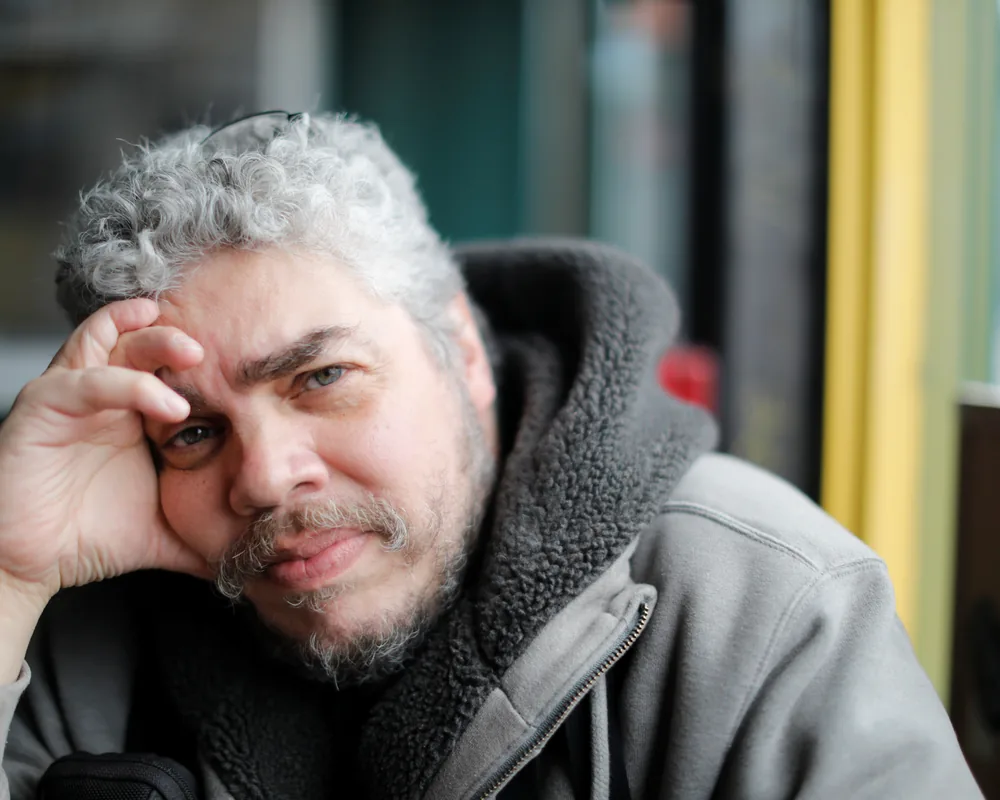
By Jane Gottlieb | Photo by David Gonzalez
 Photojournalist Ricky Flores was home in Westchester County when he saw the first plane had crashed into
the World Trade Center. He jumped in his car, wearing sneakers, no socks, raced there,
and shot scores of images of the carnage.
Photojournalist Ricky Flores was home in Westchester County when he saw the first plane had crashed into
the World Trade Center. He jumped in his car, wearing sneakers, no socks, raced there,
and shot scores of images of the carnage.
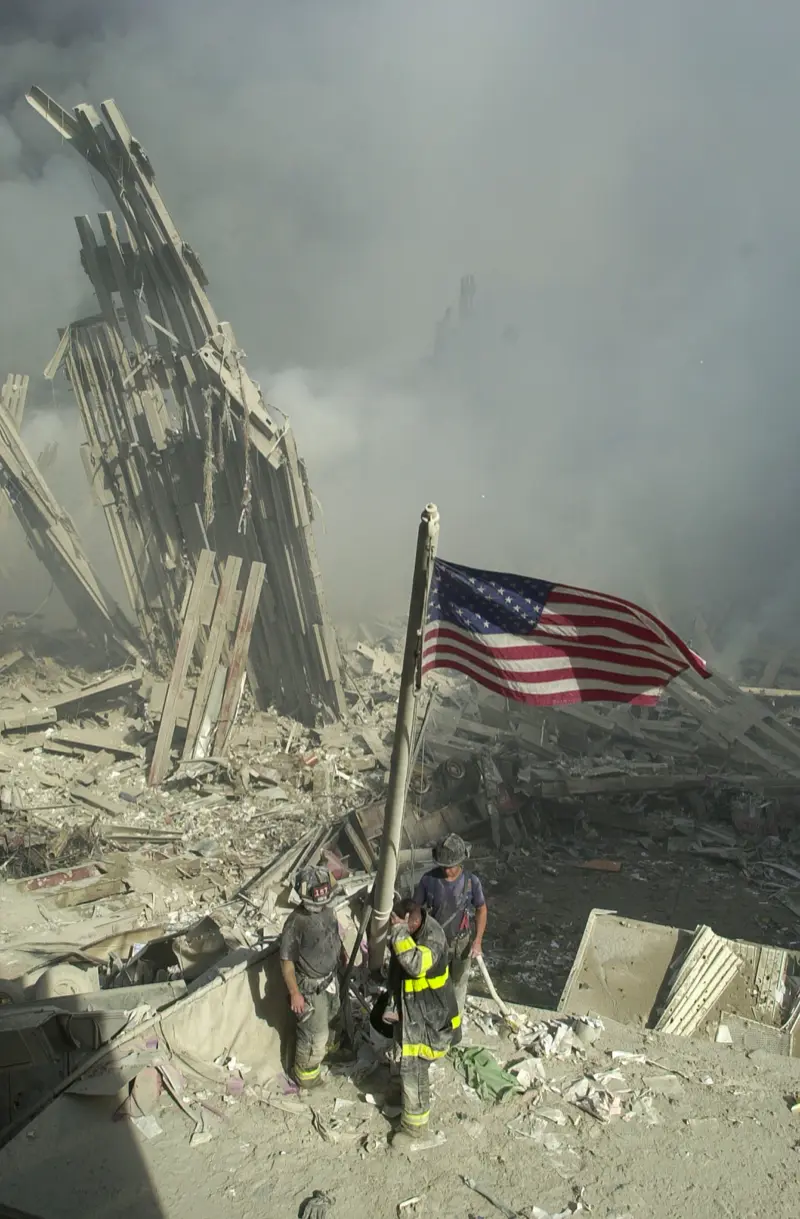
His Journal News editors led with a photo of exhausted firefighters hoisting an American flag in the ruins.
Flores’ wrenching, dignified work went global; people thanked him for capturing the humanity in the horror. His salary doubled. And the 9/11 photos cemented his prominence in journalism and social justice.
Photo courtesy of Ricky Flores/The Journal News
The Price
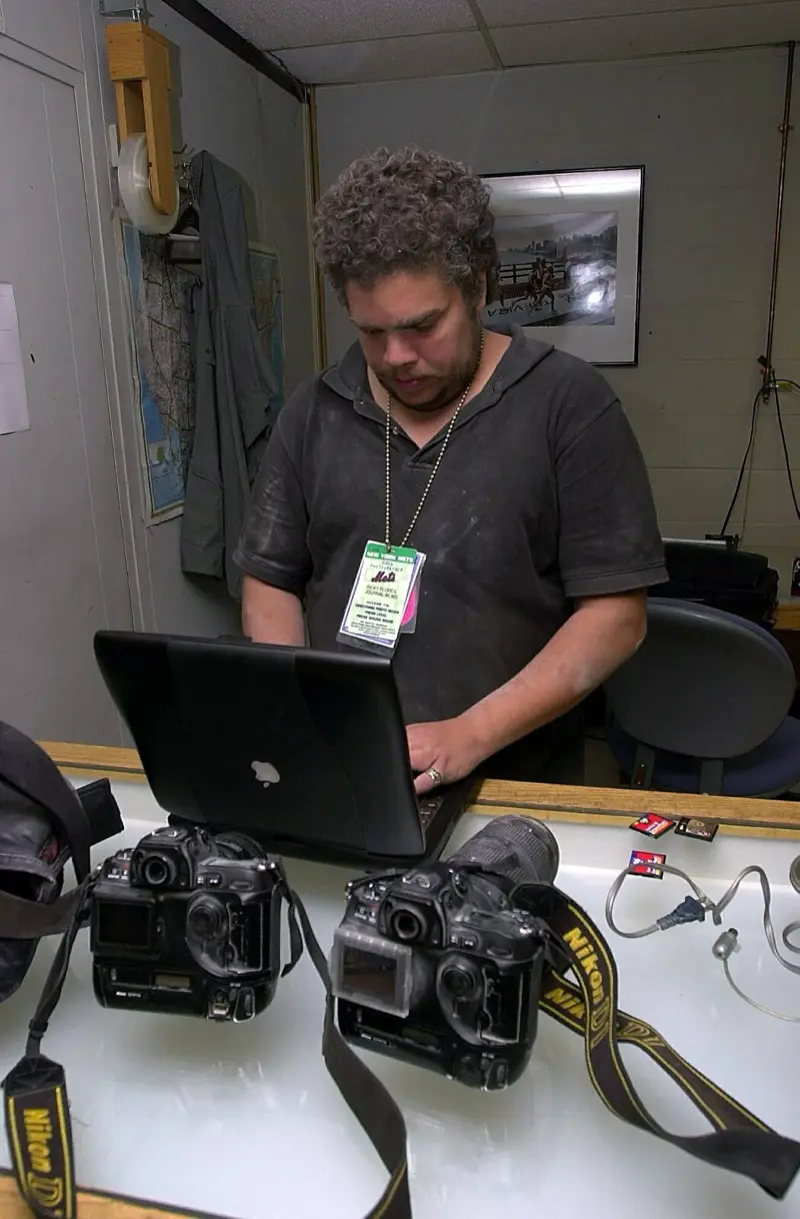 Today, Flores is a Lehman College instructor, renowned for documenting urban life.
His widely exhibited work has been featured in The New York Times and The New Yorker.
His images from Sept. 11 earned him the first of three spot news awards from the New York Press Photographers Association.
Today, Flores is a Lehman College instructor, renowned for documenting urban life.
His widely exhibited work has been featured in The New York Times and The New Yorker.
His images from Sept. 11 earned him the first of three spot news awards from the New York Press Photographers Association.
But recognition came at a cost. Flores wrestled with benefiting from the deaths, and he is still treated for an illness he acquired at Ground Zero.
These days, he grants fewer 9/11 interviews. “I don’t want to relive it,” says Flores, who went on to spend 25 years at the newspaper.
As singular as the terrorist attacks were, his photos incorporated familiar elements. The South Bronx neighborhood of his childhood was strewn with rubble-filled lots. He frequently saw smoke rising from buildings claimed by fire. Chaos and firefighters were ever present.
“Those guys kept us alive,” he says. “We were very protective of them. When we saw how devastating 9/11 was for the firefighters, it kind of broke me.”
Photo by Matthew Brown
Neighborhood Art
"My connection to photography deepened, and I learned the politics behind what was happening in the South Bronx."
The son of Puerto Rican parents, Flores was impoverished by his father’s death. Disparaging treatment at a social services office convinced him and his mother to forego welfare. They worked numerous jobs. At 18, Flores bought the Pentax to start what became an archive of his neighborhood.
Hungry to learn all aspects of photography, he enrolled in art school, where more affluent classmates dismissed his work as disturbing, not art.
“I showed two kids playing cops and robbers in a lot and they said I was obsessed with violent imagery,” Flores recalls. “I said, ‘What are you talking about? They are just playing.’”
A teacher put him in touch with longtime SUNY Empire professor Mel Rosenthal, a fellow Bronx native and documentary photographer. Moved by Flores’ portfolio, Rosenthal convinced him to enroll.
Mentors and peers saw the importance of the portraits Flores created of his neighborhood. He graduated with a bachelor’s degree in the arts and credits SUNY Empire with helping him build on his life’s work.
“My connection to photography deepened, and I learned the politics behind what was happening in the South Bronx,” Flores says. “I can’t underestimate what that did for me.”